

What Is Plumbing SEO?
Plumbing SEO refers to a collection of strategies aimed at enhancing a plumbing company’s visibility on search engines such as Google.
By implementing effective SEO techniques, plumbers can reach local customers who are actively searching for services like:
- Emergency plumber near me
- Plumbing companies near me
- Plumbers in [city]
- Plumbers in [Service Area]
It focuses on ensuring your business appears in the top 3 search results when potential clients need it most. A well-optimized website helps drive more traffic from search engines, connecting you with customers who are actively looking for plumbing services.
It generates quality leads and converts them into booked jobs. This growth is achieved organically, without the need for paid advertising. Let SEO DEVZ turn clicks into calls and searches into service bookings for your plumbing business.
Why Is SEO Important for Plumbers?
When a pipe bursts or the hot water suddenly stops, the first thing people do is grab their phone and Google a solution. That’s where SEO comes in. It helps your plumbing business show up right when someone in your area is urgently searching for help like:
- plumber near me
- fix water heater fast
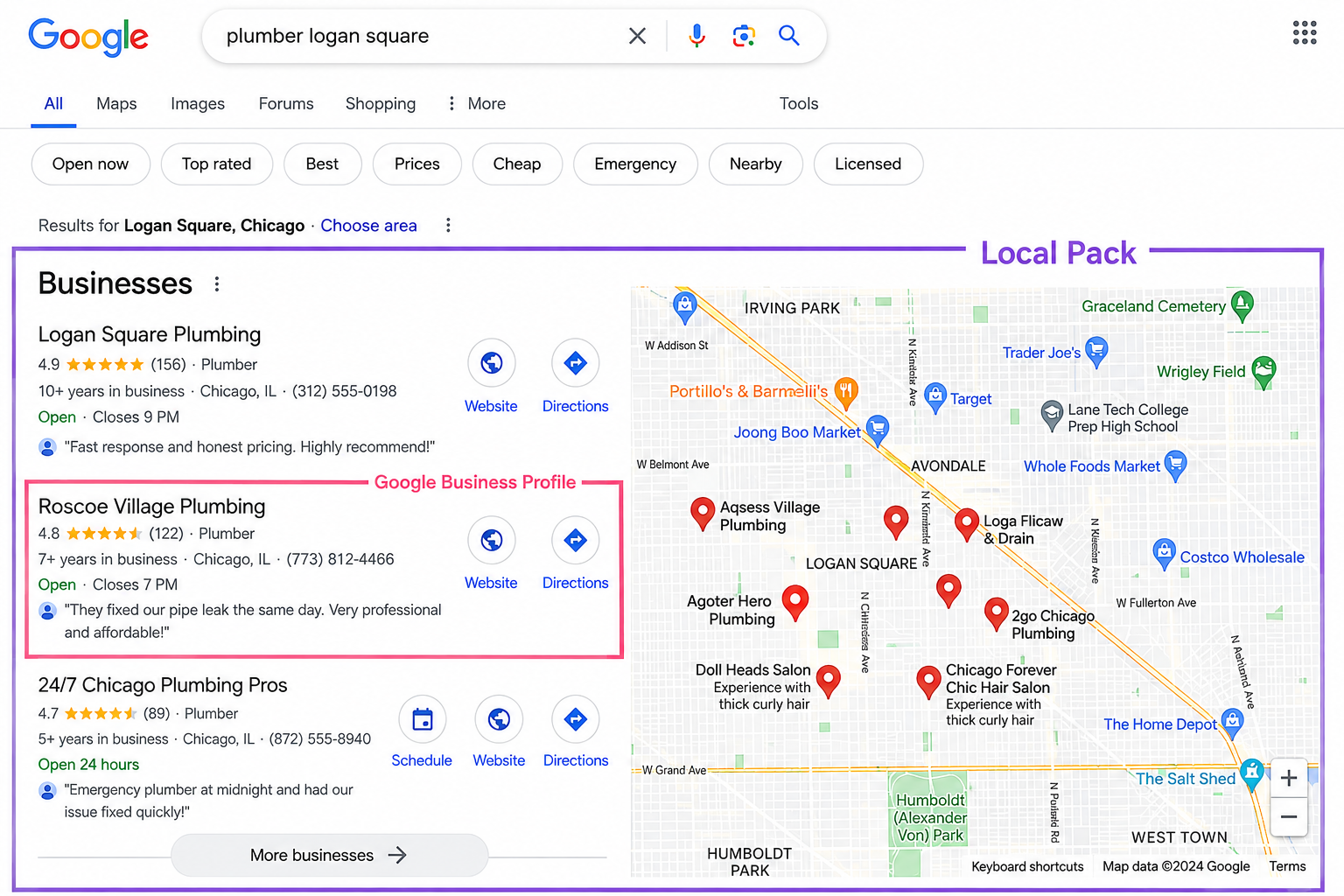
SEO will allow you to target the customers directly, rather than hoping to get them by word of mouth or costly advertisement; it builds credibility through improved search positioning and leaves your phone ringing with solid leads ready to book you. It is the smart way to grow your business in a digital world where every search matters.
Here’s why SEO matters:
- Local visibility: It helps your business show up in “near me” searches and Google Maps when homeowners need a plumber fast.
- Targeted traffic: They will bring in users that are specifically seeking out our services and thus are more likely to convert.
- 24/7 presence: Compared to the advertisements, SEO is present 24/7, which means you can continue appearing to potential clients when you are not at the job.
- Cost-effective growth: In the long term, SEO proves to be better and more economical than the original advertising campaigns because it generates a constant flow of organic traffic without any additional advertising.
Core SEO Strategies for Plumbing Companies
- GMB Optimization for Plumbers: When someone searches for a plumber nearby, your Google My Business (GMB) profile is often the first thing they see before they even visit your website. That is why GMB is not just important, it’s an essential factor. With the right GMB optimization, your plumbing company will shine in local search and stand out against the competition and convert casual searches into booked jobs.
- What is Google My Business and Why It’s Vital for Plumbers: Google My Business serves as your digital storefront on Google Search and Maps. It displays your contact information, services, customer reviews, and other key details in one convenient view. For plumbers, this is crucial because homeowners often search in urgent situations. The fully optimized profile can provide you with a higher opportunity to appear in the search results on the Internet tagged as “plumber near me” and appear in the Local 3-Pack (top three positions of map results).
How to Claim and Verify Your GMB Listing
One of the first and most important steps in local SEO is claiming and verifying your GMB. At Get Vision, we provide the Best local seo Solutions for plumbers, and optimizing your GMB is one of the most effective ways to boost local visibility, appear in the map pack, and drive leads straight to your phone.This is the best way to claim and verify a listing:
- Add or Claim Your Business: Visit Google Maps and search for your business. When it is already listed, then you can claim it. Otherwise, do add it by clicking on the option to “Add your business” and then following the guided steps. Ensure that NAP (business name, address, and availability of a business) is similar to the one on your site.
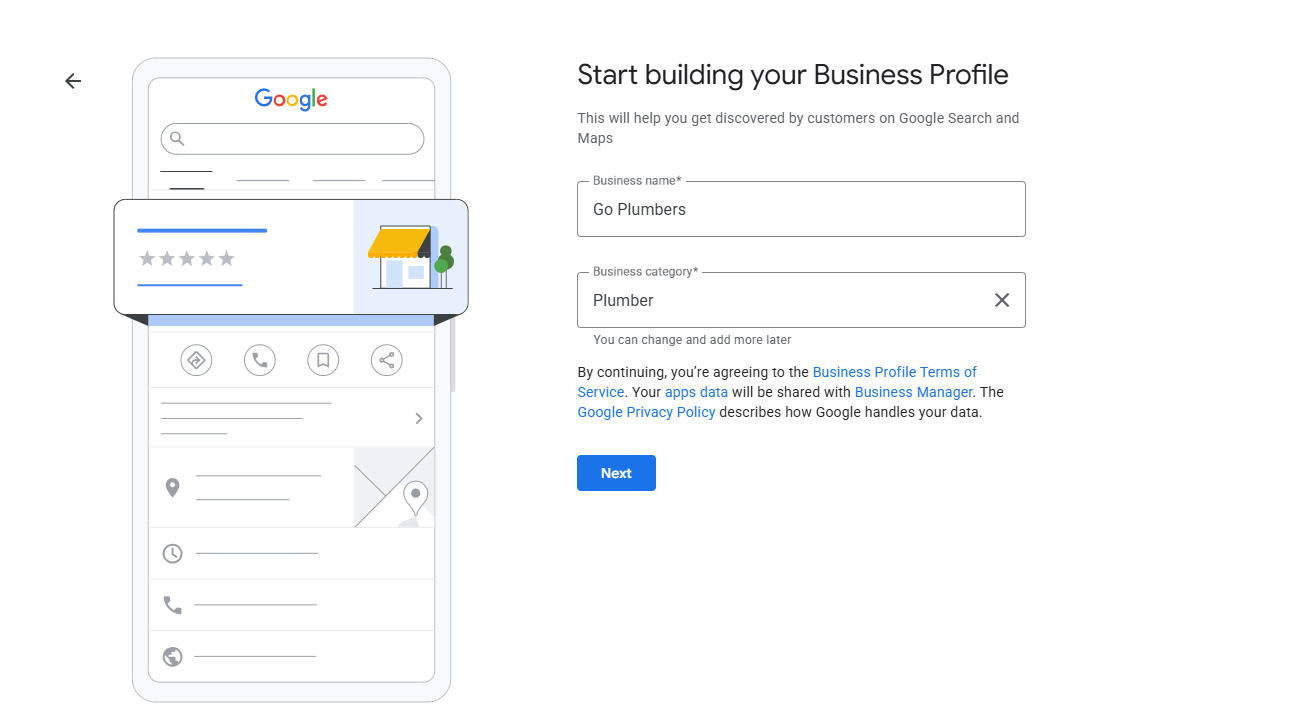
- Choose the Right Business Category
Setting the correct business category is crucial. Choosing the most accurate category helps Google show your business to the right audience.
“Plumber” is the most common category, but be more specific if you specialize.
- Define Your Service Area
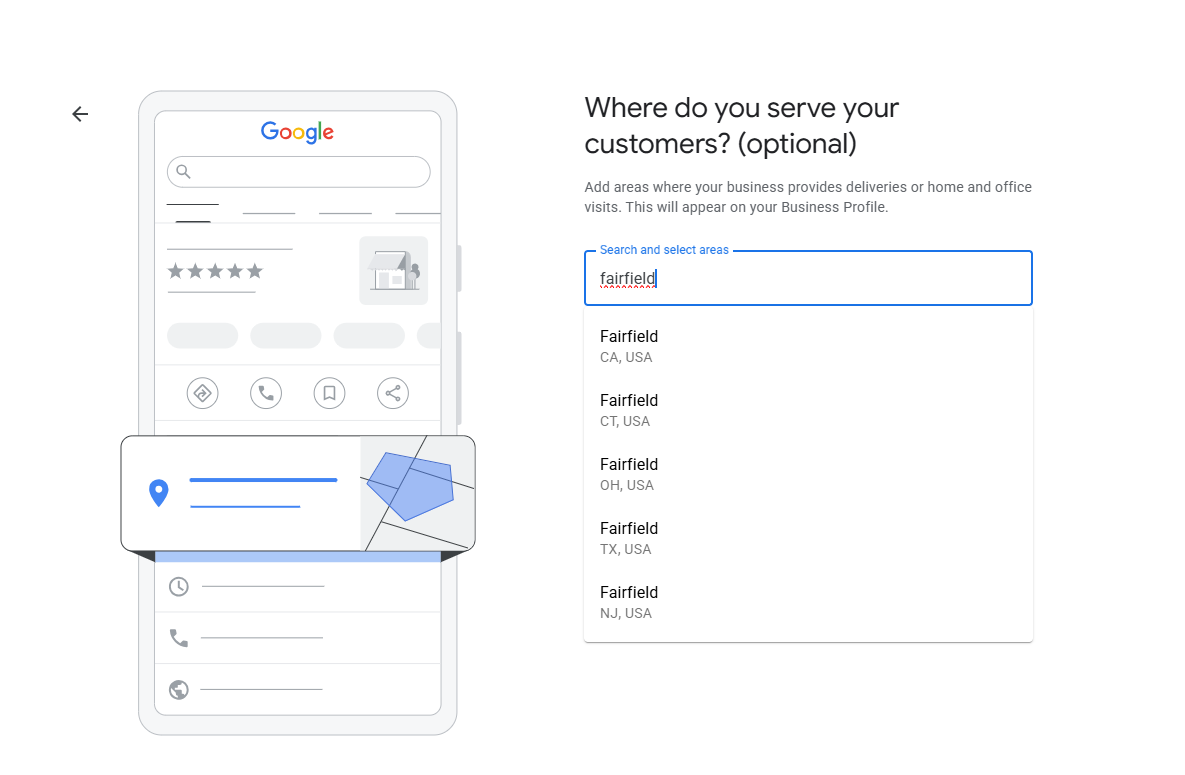
Let customers know where you operate. You can list up to 20 service areas, but they must be within about a two-hour driving radius of your business location to follow Google’s guidelines. Accurately setting this helps attract leads from your actual service zones.
- Add Essential Business Info
Ensure your GMB profile includes Business hours, Phone number, Website URL, High-quality photos of completed plumbing jobs
- Add Your business Description We also craft compelling and SEO-friendly business descriptions that reflect your brand’s identity. Here is an example: At ( Company name), we provide expert plumbing services across USA with a focus on reliability, quick response, and transparent pricing. From emergency plumbing and drainage repairs to full bathroom installations, our team is trusted by hundreds of local households. We’re proud to serve residential and small commercial clients with fast, affordable, and long-lasting plumbing solutions.
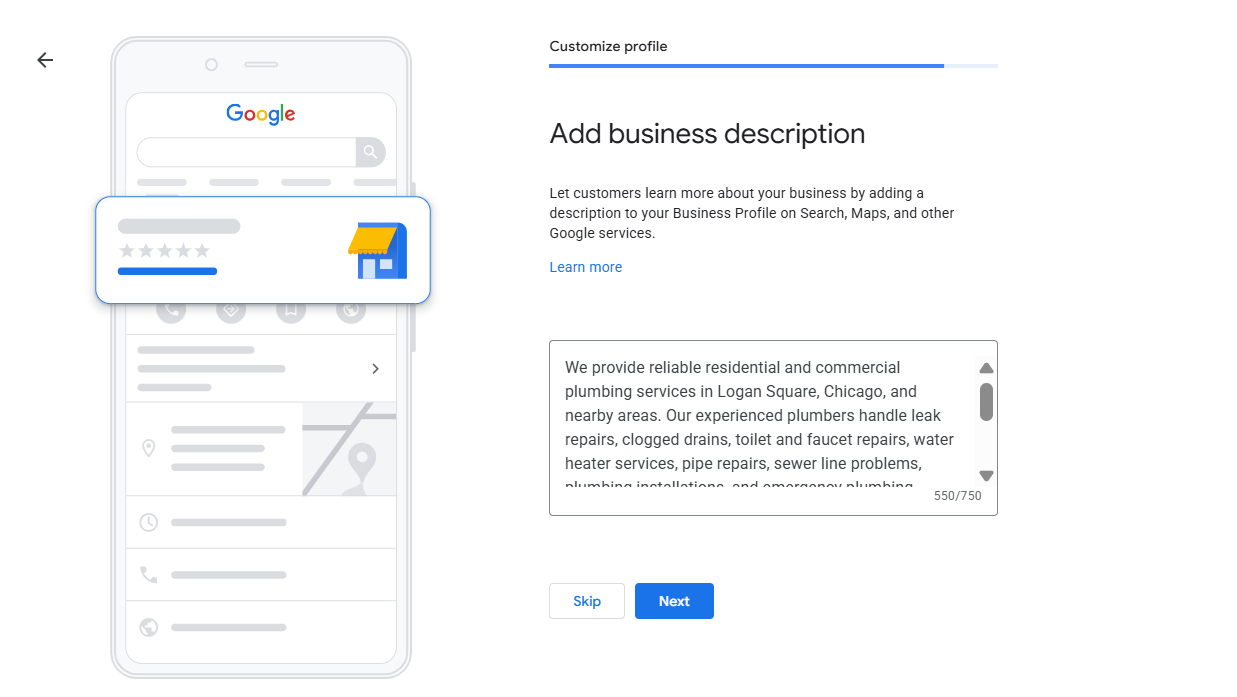
This type of description avoids keyword stuffing but naturally includes important terms like emergency plumbing, drainage repairs, bathroom installations, and Karachi to boost local SEO visibility.
We do this across every client profile at SEO DEVZ, making sure the tone is professional, customer-focused, and aligned with your unique service offering. Our goal is to help you show up not only in searches but in the minds of customers looking for dependable plumbing professionals in your area.
List Your Services Clearly
List every service you offer such as:
General Plumbing Services:
- Faucet installation and repair
- Pipe leakage repair
- Water pipeline installation
- Bathroom and kitchen fittings
- Flush tank repair
- Valve and joint replacement
Bathroom & Kitchen Installations:
- Installation of wash basins, toilets, and showers
- Water heater (geyser) installation
- Sink and dishwasher fitting
- Bathtub installation
Leak Detection & Repair:
- Water or gas leak detection
- Seepage and dampness control
- Wall or floor leakage repair
Emergency Plumbing
- 24/7 emergency plumbing service
- Burst pipe or flooding repair
Drain & Sewer Services
- Drain cleaning
- Sewer line cleaning and repair
- Unclogging blocked drains
Water Heater Services
- Water heater or geyser repair
- Electric or gas heater installation
- Fixing water pressure issues
Water Supply System Services
- Water tank to home supply setup
- Boring or motor fitting
- Water pump or pressure pump installation and repair
Gas Line Plumbing
- Gas pipeline installation
- Gas leak detection
- Gas line setup for stoves or geysers
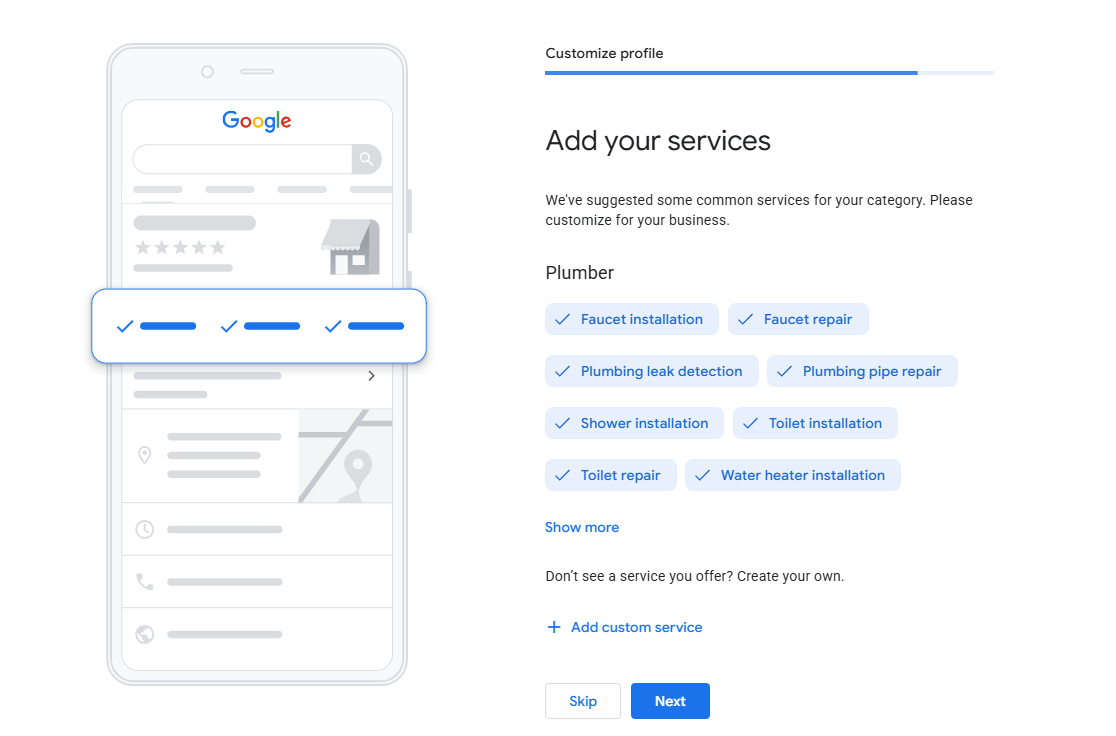
This helps you rank for relevant search terms and avoids time-wasting calls from people looking for services you don’t provide.
How to Get More 5-Star Reviews (And Respond to Them)
After every successful job, kindly ask your customer for a review as it makes a big difference. Send a direct link via text or email. When you get a 5-star review, respond with gratitude and personality. If you receive negative feedback, address it professionally and say that you will make it right. This shows potential clients that you care.
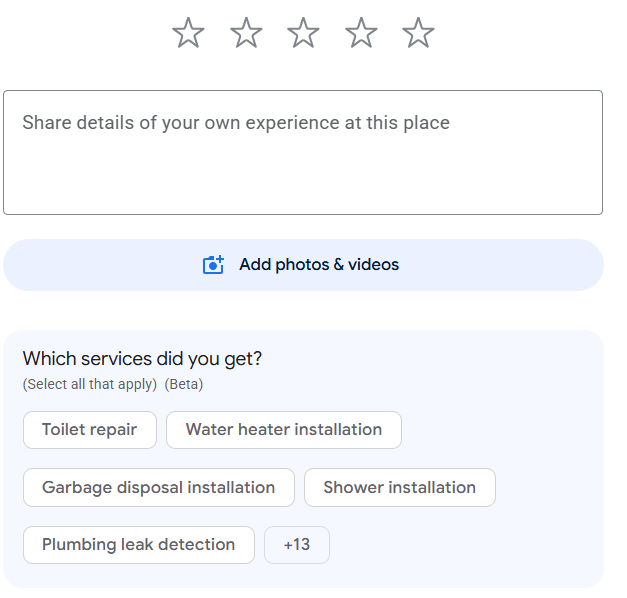
Here’s how to build a stronger review presence:
- Generate your review link via Google Business Profile Manager and send it to satisfied customers right after completing a job.
- Turn that link into a QR code and place it on your business cards, flyers, and invoices, making it easy for customers to leave a review on the spot.
- Follow up with past clients through a friendly call or text to remind them how much a review would help your business, and their input truly matters.
- Display your review link prominently on your website, especially on contact or thank-you pages, to prompt more feedback.
- Encourage customers to include photos or videos with their reviews.
- Respond to every review, positive or negative. 88% of consumers are more likely to use a business that replies to all reviews, while consistent activity signals reliability to Google.
- Aim for review consistency.
Using Posts, Q&A, and Updates to Rank Higher Locally
Google loves fresh content. Use the Posts feature to highlight seasonal offers, tips like “how to winterize your pipes,” or spotlight customer success stories. Regularly check and answer the Q&A section, it builds trust and authority. Keeping your listing updated signals to Google that you’re active and relevant.
Submitting to Local Directories & Citation Sites
Consistency is key. Submit your business info to trusted local directories like Yell, Hotfrog, Freeindex, and others. Make sure your Name, Address, and Phone Number (NAP) is consistent across all platforms. These citations reinforce your legitimacy in local SEO.
Expand Your Online Presence with Data Aggregators
If you’re aiming to boost your visibility across the web without submitting your business to every platform manually, data aggregators are a smart solution. These potent networks relay your business details to dozens or hundreds of directories without any manual effort.
Key U.K. Data Aggregators:
-
Yelp
-
Bing Places
-
Apple Business Connect
-
Better Business Bureau (BBB)
In addition to these, make sure your plumbing business is listed on trusted, high-authority platforms like:
- Angi
- Thumbtack
- HomeAdvisor
- Yellow Pages
- Nextdoor
These listings not only improve your local visibility but also help keep your business information consistent and accurate across the web.
Get Listed in Niche and Local Directories
Beyond general directories, industry-specific and city-based listings are excellent for targeted SEO and local traffic. These niche platforms often rank well in local search and provide valuable backlinks.
Common GMB Mistakes Plumbers Make
- Inconsistent business name, address, and phone number (NAP) across platforms
- Not verifying the Google My Business listing
- Showing a home address instead of hiding it for service-area businesses
- Choosing an incorrect or too general business category
- Ignoring customer reviews (positive or negative)
- Not uploading real or high-quality photos
- Not using the GMB post feature for updates and offers
- Missing or outdated business hours, especially during holidays
- Keyword stuffing in the business name field
- Not adding all the service areas you cover
- Leaving the services and descriptions section blank
- Not using or responding in the Q&A section
Avoiding these simple errors can make a major difference in how often and how well your business ranks locally.
On-Page SEO for Plumbing Websites
At SEO DEVZ, we understand that a powerful online presence starts with effective on-page SEO. Every element on your website, from the content to the code plays a role in helping your business rank higher on Google and connect with customers looking for your plumbing services.
Keyword Research for Plumbing Terms
Effective on-page SEO begins with identifying the most relevant and high-intent keywords related to plumbing. Common search terms like “emergency plumber near me” or “water heater installation in [city]” will enable us to adjust the content on our web resources to what people are actively searching at the moment.
Why Keyword Research Matters
When done right, keyword research helps your plumbing business:
- Attract more qualified website visitors
- Rank higher on Google for service-related queries
- Reduce bounce rates by delivering relevant content
- Improve conversion rates by matching searcher intent
Understanding Search Intent in Plumbing SEO
Search intent is the reason behind a user’s query.It tells us why someone is searching and what they expect to find. In the case of plumbing businesses, optimizing your web pages to the proper manner of search intent would mean that you have qualified traffic, solve the actual needs of customers, and increase leads or conversions.
There are four main types of search intent, each requiring a different content strategy:
- Informational: The user wants to learn something, such as “how to fix a clogged toilet.” Ideal for blog posts and DIY guides.
- Navigational: The user is looking for a specific business or website page, like “Jerry’s Plumbing Company hours.” Useful for branded and contact page optimization.
- Commercial: The user is comparing services, such as “best plumbers in Austin.” Perfect for service pages, reviews, and comparison content.
- Transactional: The user is ready to act, searching for terms like “hire a plumber” or “book drain cleaning.” Use these keywords on landing pages with strong calls to action.
Next, look at two other crucial keyword metrics that shape your SEO strategy:
- Search Volume: This refers to the average number of times a keyword is searched each month. For example, terms like “emergency plumber” or “drain cleaning” often have high search volume, indicating strong demand and consistent user interest.
- Keyword Difficulty (KD): This is a score out of 100 to indicate how competitive a keyword is. A higher KD may indicate a more competitive keyword.
Targeting Competitor Keywords to Boost Your Plumbing SEO
Analyzing competitor websites helps uncover keyword opportunities your business can leverage to outrank them. Focus on high-potential keywords your competitors may be underutilizing:
- Identify those keywords that are already ranking and are high traffic and low competition (ie, leaky faucet repair, or affordable plumber in [area])
- Identify keyword gaps where your plumbing business can create more optimized, localized content
- Build service pages that are SEO-friendly, and use these keywords to create good headings, local references, and call to actions
- Provide the right, useful information to the same query terms, and you will outrank your competition because there is more relevant, useful, and location-specific information, and you stand to get more traffic.
Through our professional SEO services, we assist businesses in the plumbing industry to identify these gaps, focus on targeting the correct keywords, and develop content that not only ranks but also converts.
Industry-Specific Content Creation
Creating valuable, informative, and locally relevant content that is specifically designed for the plumbing industry will have a positive impact on the engagement of users and search engine positioning. These are pages with services, blogs, and guides by location.
Create Dedicated Service Pages
Every core service you offer deserves its page. This allows you to target specific keywords, answer customer questions clearly, and improve your chances of ranking for high-intent search terms.
Focus on 4 Key Areas:
- Clearly describe the service and the problems it solves (e.g., leaky pipes, clogged drains, emergency water heater repair). Use relatable language that speaks directly to your customer’s concerns.
- Let users know where you operate. Include a map, a list of service areas, and city-specific keywords to boost local SEO.
- Build trust with potential customers by showcasing reviews, accreditations, years of experience, and your unique selling points (e.g., 24/7 availability, upfront pricing, certified technicians).
- Make it easy for visitors to get in touch. Add phone numbers, contact forms, and “Book Now” CTAs.Ensure everything is responsive.
Build a Trustworthy “About” Page
Create a Credible About Us-Page. Your Bio page is not only your company representation. It is where to present your E-A-T: Expertise, Authoritativeness, and Trustworthiness. Although E-A-T is not a direct ranking factor, the content with such qualities is likely to perform better in response to search queries.
Key Elements to Include:
- A brief company history.How you started and why
- How long have you been in business or working in plumbing
- Certifications, training, and professional licenses
- Insurance information
- Customer testimonials and success stories
This page can be used to personalize your business, connect with others, and build trust, which is especially critical in local service businesses such as plumbing.
Create a Location Page (or Multiple Pages)
If your plumbing business serves more than one area, having a dedicated location page (or multiple) is a great way to improve local SEO and help customers find you in specific service zones.
Two Approaches:
- One Location Page listing all your service areas (ideal for smaller teams or local coverage)
- Individual Location Pages for each area (better for companies with wide coverage or multiple offices)
Each location page should include:
- The area name in the title and headings
- Specific services offered in that location
- A map, local contact number, and office hours
- Reviews from customers in that area.
Why Content Creation Matters
Strategically built content doesn’t just help you rank. It builds trust, educates your audience, and drives conversions. When it comes to the competition, regardless of whether you are a new company or growing to serve numerous service regions, paying attention to clear content, your plumbing business will create a significant advantage in the local market.
Optimizing Title Tags, Meta Descriptions & H1s
Properly optimized title tags, meta descriptions, and header tags (H1s, H2s, H3s) improve click-through rates and help search engines understand the structure and relevance of each page.
Creating Specific Services & Location Pages
Well-optimized title tags, meta descriptions, and header tags (H1s, H2s, H3s) enhance click-through rates and help search engines deliver more precise results to users searching for plumbing help in specific locations.
Content Optimization with Keywords & NLP Phrases
Incorporating primary keywords, related terms, and natural language processing (NLP) phrases ensures that content matches how real users speak and search. This helps pages rank for a broader range of relevant queries.
What to Include:
- Primary Keywords: The main search term you want to rank for (e.g., emergency plumber in Toronto)
- Related Keywords: Variations or synonyms that support the main topic (e.g., 24-hour plumbing service, urgent plumbing repair)
- NLP Phrases: Naturally used questions or phrases extracted from how people search on Google, often found in the “People also ask” section (e.g., what to do if a pipe bursts, how fast can a plumber come?)
Example:
Optimizing a Service Page for “Emergency Plumbing”
Before Optimization:
“We offer plumbing services in emergencies. Call now for help.”
After Optimization (with keywords & NLP):
Do you need an emergency plumber in Toronto 24/7? About no hot water, burst pipe, or overflowing toilet, our licensed technicians will be there, often in 30 minutes. Curious when the plumber is going to arrive, and what are your options when the bathroom gets flooded? We have got answers. Emergency plumbing work–Call now!
Optimizing Images with Alt Text & File Names
Optimizing image file names and alt text with relevant keywords improves website accessibility, enhances user experience, and contributes to SEO through better image indexing in search engines.
Why Image Optimization Matters
- Boosts SEO: Search engines read image file names and alt text to understand your content, helping you rank in Google Image Search.
- Improves Accessibility: Alt text allows screen readers to describe images for visually impaired users, making your site more inclusive.
- Faster Indexing: Optimized images help search engines crawl and index your pages more efficiently.
- Enhances Visibility: Well-optimized images can appear in rich search results which increases your chances of getting more clicks.
Internal Linking Between Pages
A strong internal linking structure supports better navigation for users and helps search engines crawl and index pages more effectively. It also spreads the SEO value to the rest of the site, enhancing site performance.. For example, linking from your blog on “how to fix a clogged toilet” to your Toilet Repair Service page not only helps readers find your service faster but also tells search engines that the page is important.
Mobile-Friendly Design for Plumbers
Mobile optimization is more crucial than ever before because a significant number of local searches are performed via mobile devices. A website on plumbing should be responsive and fast with easy navigation ability.. This is especially critical for users facing emergencies who need immediate access to services.
Creating FAQ Sections Using “People Also Ask”
Adding FAQ sections based on real queries from Google’s “People Also Ask” feature enhances content relevance and provides quick answers to common questions. This improves user experience and increases the chances of appearing in featured snippets.
By including FAQs:
- You boost the topical relevance of your content
- Increase your chances of showing up in featured snippets or voice search results
- Keep users on your site longer by immediately answering their most pressing concerns
- Help Google better understand your page structure and content depth
How to Use “People Also Ask” for FAQs:
- Search a target keyword (e.g., water heater repair) and explore the PAA box to identify commonly asked questions
- Select 3–5 highly relevant questions that align with your services
- Provide concise and helpful answers.
- Use schema markup (FAQPage structured data) if possible to improve visibility in search results
For example:
- Q: How do I know if my drain is clogged?
A: Slow drainage, foul odors, or gurgling sounds are common signs of a clogged drain.
Off-Page SEO for Plumbers
Why Backlinks Matter for Plumbing Websites
Backlinks are one of the most powerful tools in SEO, and for plumbing websites. They play a critical role in driving visibility and building trust online. A backlink is a hyperlink from another website that leads to yours. When trusted and relevant sites link back to your plumbing business, search engines like Google see it as a signal of authority. The more high-quality backlinks you have, the more likely your website is to rank higher in search results.
In the case of plumbing companies, local directories, blogs on plumbing, and home improvement websites provide backlinks, which in turn create credibility and enhance local search engine optimization. Such links not only enable you to raise your rankings but also generate referral traffic. Visitors who are already interested in plumbing services and more likely to convert into real leads.
A strong backlink strategy helps your website:
- Rank higher in Google and local search results
- Gain authority in your service area
- Build trust with both search engines and potential customers
- Drive qualified, high-intent traffic to your site
- Stay ahead of less-optimized competitors
At SEO DEVZ, we know how to earn the backlinks that matter. Our team specializes in building credible and strategic backlink profiles for plumbing businesses that want to grow online. We connect you with local directories, niche sites, and content opportunities that strengthen your SEO and deliver measurable impact.
How to Build High-Quality Local Backlinks
Building high-quality local backlinks is all about getting your plumbing business featured on reputable, relevant platforms that are trusted by both search engines and local customers. These backlinks help boost your visibility in local search results and signal credibility to Google. The key is to focus on authentic connections within your community and industry. SEO DEVZ help plumbers build powerful local backlink strategies:
- Submit to trusted local directories: Add your business to platforms like Yelp, Angi, HomeAdvisor, and BBB. These directories are not only high-authority but also popular among homeowners looking for plumbing services.
- Join local chambers and associations: Submit your company to local listings such as Yelp, Angi, HomeAdvisor, and BBB. These directories are not just high authority but also popular with plumbing services, even with homeowners.
- Collaborate with nearby businesses: Partner with HVAC companies, electricians, or kitchen remodelers for co-branded content or referral pages. These links make sense contextually and improve relevance.
- Sponsor community events or charities: When you become a sponsor of a local event or cause, your logo and web address will commonly be listed on their official website, which is an automatic backlink
- Get featured on local blogs or news sites: Reach out to local lifestyle or home improvement bloggers, or submit press releases to local media when you launch a new service or participate in a community initiative.
- Create valuable, shareable content: Publish helpful guides like “How to Prevent Frozen Pipes in [City]” or “5 Signs You Need a Professional Drain Cleaning.” Local websites may link to your content as a trusted resource.
Keep Track of Your Best Links
When it comes to backlinks, focus on quality over quantity. This is why it’s a good idea to check for low-quality backlinks. Low-quality links can come from:
- Sites or content that are unrelated to your industry
- Sites with low domain authority
- Sites with low traffic
- Sites with spam content
Guest Posting on Home & Repair Industry Blogs
Guest posting is one of the smartest ways to boost your plumbing website’s authority while getting in front of a highly targeted audience. By contributing valuable articles to home improvement, DIY, or repair-focused blogs, you’re not only earning high-quality backlinks but also building your reputation as a local expert.
These guest posts allow you to share your plumbing experience with people who already seek tips, solutions, and reliable people.. Whether it’s a guide on “how to prevent pipe leaks” or a checklist for “winterizing your home plumbing,” your content can educate readers and bring traffic directly to your site.
Here’s what makes guest posting so effective:
- Earns high-quality & relevant backlinks
- Builds brand authority and local trust
- Drives targeted referral traffic from real readers
- Boosts local SEO and improves Google rankings
Using Social Media for Brand Mentions
Social media isn’t just for likes, it’s a goldmine for visibility and local SEO. Whenever your customers refer to your plumbing company on social media sites such as Facebook, Instagram, or Nextdoor, they create awareness and indicate to search engines that your brand is present and reputable among the locals. By consistently sharing helpful tips, behind-the-scenes content, customer success stories, and seasonal maintenance reminders, you encourage organic brand mentions, shares, and even local recommendations.
Ideas to boost mentions:
- Share quick how-to videos (e.g., “how to stop a running toilet”)
- Feature real customer reviews with before/after photos
- Run local giveaways for free inspections or discounts
- Collaborate with local influencers or neighborhood groups
Press Releases and Local News Publications
Want to boost your credibility overnight? Get featured in your local news. A professionally written press release can turn a new service launch, community sponsorship, or business milestone into local headlines and quality backlinks.
Whether you are introducing 24/7 emergency services, expanding to new service areas, or sponsoring a local school event, we can help you turn that moment into coverage that counts.
Examples of press-worthy plumbing content:
- Launching a new eco-friendly pipe repair method
- Donating services to a local charity or school
- Expanding your service area or hiring local staff
- Winning a community service or business award
Building Partnerships with Local Contractors or Realtors
Partnerships are one of the most underrated ways to grow your online presence and earn quality backlinks. By collaborating with local contractors, realtors, property managers, or even home stagers, you can tap into a network of professionals who regularly need plumbing expertise.
A simple referral link from their website to yours not only strengthens your SEO.It also brings qualified leads from trusted sources.
Smart partnership ideas:
- Be the go-to plumber for a real estate agent’s new listings
- Offer plumbing inspections for property managers’ rental units
- Co-create home maintenance checklists with local builders
- Swap backlinks or blog features with HVAC or roofing partners
Improving Website Speed (Core Web Vitals)
Website Loading speed is more than just a technical metric.it’s a direct reflection of your plumbing business’s professionalism and trustworthiness. Google’s Core Web Vitals are essential indicators that measure how quickly and smoothly your website loads and responds. These include:
- Largest Contentful Paint (LCP): Measures loading performance.
- First Input Delay (FID): Measures interactivity.
- Cumulative Layout Shift (CLS): Measures visual stability.
Why Website Speed Matters for Plumbers
When someone searches for a plumber, they often need help urgently. A slow-loading site can drive potential customers away within seconds. Research shows that 53% of mobile visitors leave a page if it takes more than 3 seconds to load. That lost visitor could have been a high-value emergency plumbing job.
For local service providers like plumbers, a fast and smooth website can be the deciding factor between gaining or losing a lead.
Key Benefits of Improving Website Speed
- Higher Search Engine Rankings:
Google uses Core Web Vitals as a ranking factor. A faster website can boost your visibility on local search results, especially for keywords like “plumber near me”. - Better User Experience:
Fast-loading pages keep users engaged and reduce bounce rates. - More Conversions & Bookings: A fast site builds credibility and helps turn casual visitors into paying customers.
- Mobile Optimization: Most people search for plumbers on mobile. A fast and mobile-optimized site performs better across all devices.
- Reduced Bounce Rate:
Visitors won’t wait. Faster load times decrease the chance of users leaving your site before it even finishes loading. - Competitive Advantage: Most local competitors neglect speed. By optimizing Core Web Vitals, you get an edge and stand out in local searches.
Mobile-First Indexing & Responsive Design
With more than 60% of all searches now happening on mobile devices, Google has shifted to mobile-first indexing which implies that it not only indexes and ranks the mobile variant of your site more often as of default, but it also now uses that mobile version to determine how a page should be indexed and ranked . If your plumbing site isn’t mobile-friendly, you’re not just losing leads but also losing visibility in search engines. At the same time, responsive design ensures your website automatically adjusts to different screen sizes (phones, tablets, desktops).It deliver a consistent and smooth experience for all users.
Key Features:
- Mobile-friendly layout that adapts to all screen sizes
- Easy-to-tap buttons and click-to-call phone numbers
- Fast loading on mobile devices
- Readable text without zooming
- Simple navigation with touch-friendly menus
- One website version for all devices (no duplicate content)
- Optimized images that scale properly on phones and tablets
- Improved mobile SEO rankings
Enabling HTTPS & Site Security (SSL Certificate)
Rising online scams, fake websites, and phishing traps, customers are cautiousand rightfully so. When a customer comes to your plumbing site and on the browser there is the message “Not Secure” flashing, they have already lost. Either you are the greatest plumber in town or not, this message scares them away even before they see your reviews.The lock icon means your site is safe. By enabling HTTPS through an SSL certificate, you are not just securing data.You are showing customers you’re legit and professional company
Clean URL Structure & Proper Navigation
A clean URL structure and easy-to-follow navigation make it simpler for both users and search engines to understand your plumbing website. Clear and keyword-friendly URLs like /services/drain-cleaning are better than messy ones with random characters that create problem for your website visitors. Good navigation ensures that visitors can find what they need quickly whether it’s emergency plumbing help or a quote request.
Why it matters:
- Improves user experience and engagement
- Helps Google index your pages accurately
- Boosts local SEO with keyword-rich URLs
- Makes internal linking more effective
Submitting Sitemap & Robots.txt to Google
A sitemap tells Google which pages exist on your website and how they areorganized. A robots.txt file tells search engines which parts of your site to crawl or ignore. Submitting both helps search engines understand and index your site faster and more efficiently.
Why it matters:
- Ensures all important pages (services, contact, reviews) are indexed
- Helps new content get discovered quickly
- Prevents search engines from wasting crawl budget on unimportant pages
- Supports a well-structured SEO foundation
Fixing Broken Links and Redirect Chains
Broken links (dead pages or 404 errors) and redirect chains (You take several redirects before getting to the actual page) are not only bad in terms of user experience but also in terms of SEO.. When someone clicks a service link and ends up on a missing or slow-loading page, they’re likely to leave.Google notices this thiing very closely.
Why Fixing Them Matters:
- Keeps visitors on your site longer
- Prevents lost leads from dead service or contact links
- Improves crawlability for search engines
- Helps maintain link equity (SEO value)
Real-World Examples:
- Broken Link Example:
/leak-repair-services returns a 404 . Fx or redirect it to /plumbing-leak-repair - Redirect Chain Example:
/old-services ➜ /services ➜ /emergency-services . Fix by pointing directly to the final destination
Structured Data (Schema Markup for Local Business)
Structured data is code you add to your site that helps Google understand your business better. It’s especially powerful for local SEO because it allows your site to show rich snippets—like star ratings, business hours, service area, and even reviews—in search results.
What It Does:
- Tells Google your business is a plumber
- Shows your contact details, location, hours, and ratings
- Helps display rich results in search (like star ratings and service area)
Canonical Tags & Duplicate Content Fixes
Why Canonical Tags Matter:
Duplicate content confuses search engines. If multiple URLs display the same or very similar content (e.g., example.com/page1 and example.com/page1?ref=abc), search engines don’t know which to rank. Canonical tags resolve this by telling Google which version is the “master” page.
How to Use Canonical Tags:
- Add <link rel=”canonical” href=”https://example.com/preferred-page” /> in the <head> section of duplicate or alternate versions.
- Make sure every duplicate page points to the same canonical URL.
- Use absolute URLs
- Ensure canonical tags are self-referential on the main page.
Common Fixes for Duplicate Content:
- Consolidate similar product pages with minor variations.
- Install canonical tags to track URLs, session IDs and filter pages.
- Redirect outdated duplicate pages to the main one with 301 redirects when applicable.
- Avoid publishing identical content on multiple domains/subdomains.
Monitoring Crawl Errors via Google Search Console
Why Crawl Error Monitoring Matters:
Crawl errors prevent search engines from accessing, indexing, or ranking your pages properly. Google Search Console (GSC) helps you identify and fix these issues to improve site health and SEO visibility.
How to Monitor Crawl Errors in Google Search Console
- Open Google Search Console
Go to: https://search.google.com/search-console - Choose Your Property
Select your website from the property list. - Navigate to the Indexing Section
- Go to: Index > Pages
You will see errors,Valid with warnings,Valid,Excluded
Main Crawl Error Types and What They Mean
- 404 Not Found: This error occurs when a page that was once available is now missing or deleted. Search engines cannot access it. Users get a “page not found” message. To fix this, either recreate the missing content or set up a 301 redirect to a relevant alternative page.
- Server Errors (5xx): These errors indicate that your server failed to respond properly when Google tried to crawl a page. It could be due to server overload, downtime, or configuration issues. Monitoring server logs and ensuring your hosting environment is stable can help fix these issues.
- Redirect Errors: These happen when there are broken, incorrect, or endless redirect chains.As an example, a URL can redirect to another, then redirect to the first one again or dead end. This can be solved with cleaning and streamlining of your redirects preferably one clear 301 redirect.
- Submitted URL Has Crawl Issue: This means a page you submitted in your sitemap has issues that prevent Google from crawling it. It could be blocked by robots.txt, have a noindex tag, or be too slow to load. Use the URL Inspection Tool in Google Search Console to diagnose and fix it.
- Duplicate Without User-Selected Canonical: Google has found pages with similar or identical content but doesn’t know which one is the preferred version. This can hurt your SEO rankings. Adding canonical tags to define the primary version of each page helps solve this problem.
Content Strategy & Blogging for Plumbers
Why Content Is King in Plumbing SEO
Content is the foundation of successful plumbing SEO. It not only helps your website rank for valuable keywords but also builds credibility and trust with local customers. In the plumbing industry, people are often searching for quick, reliable answers to urgent problems including leaks, clogs, low water pressure, or burst pipes. When your site offers informative, well-structured content like blogs, how-to guides, FAQs, and service pages it signals to search engines that you’re an authority. Whether it’s a blog post on “How to Shut Off Your Water Valve During an Emergency” or a detailed page on “Water Heater Installation in Edmonton,” helpful content attracts qualified traffic. It keeps visitors on your site longer, and increases the chances of turning them into paying customers.
Creating a Content Plan for Your Plumbing Website
A well-structured content plan helps plumbing businesses build trust, rank higher on Google It helps to generate consistent leads. From service pages to seasonal blogs, your content should speak to customer needs while supporting your local SEO efforts.
Key Highlights for an Effective Plumbing Content Plan
- Service-Specific Pages
Focused pages for each offering, like leak detection, drain cleaning, and water heater installation. - Local SEO Optimization
Use geo-targeted keywords to attract traffic from specific cities or neighborhoods. - Educational Blog Posts
Post regularly about plumbing tips, DIY advice, and problem prevention. - Seasonal Content Strategy
Tailor content to seasonal needs (e.g., frozen pipe prevention in winter, sump pump checks in spring). - FAQ Section
Answer common questions about pricing, emergencies, and service timelines for the convenience of the customer. - Location-Based Landing Pages
Create separate pages for each service area with local testimonials and keywords. - Internal Linking Structure
Guide users through your site by linking blogs to relevant service pages. - Customer Testimonials
Showcase real examples of your successful work to build credibility and trust. - Regular Content Updates
Refresh older blog posts to stay relevant and maintain rankings. - Content Calendar
Plan monthly content to ensure consistent publishing and topic variety.
Example
Write a blog post titled:
“5 Signs Your Water Heater Needs Immediate Attention.Tips from [Your City]’s Trusted Plumber”
Keyword Research for Blog Topics (Informational & Local)
Keyword research is the backbone of successful blog content. Both informational queries and local intent drive valuable traffic. By identifying what your target audience is searching for, you can craft blog posts that not only educate but also convert readers into customers.
Why Keyword Research Matters
- It reveals real search terms used by potential customers.
- It also helps you create content that ranks on Google and addresses specific pain points.
- Supports local SEO by targeting city-specific or service-area-specific keywords.
- Boosts your authority by answering common plumbing questions in your area.
Types of Keywords to Target
Informational Keywords
These are questions and problems your customers are trying to solve. Your blog should address these directly.
Examples:
- “Why is my toilet constantly running?”
- “How to fix a leaky kitchen faucet?”
Local Keywords
These keywords help you capture traffic from customers looking for plumbing services in your area.
Examples:
- “Affordable drain cleaning in Edmonton”
- “Best plumber near me for water heater repair”
- “24-hour plumbing service Toronto
How to Find the Right Keywords
- Use free tools like Google Keyword Planner, Ahrefs Ubersuggest, or AnswerThePublic.
- Type seed phrases into Google and check:
- Autocomplete suggestions
- People Also Ask questions
- Related searches at the bottom of results
- Analyze competitor blog titles and the keywords they target.
- Use Google Trends to identify seasonal topics.
Blog Post Ideas for Plumbers
Creating a plumbing blog is a smart way to connect with homeowners and boost your online visibility. Start with how-to guides like “How to Unclog a Toilet” or “How to Fix a Leaky Faucet” to offer readers practical solutions they can try themselves. Add seasonal content such as “Winter Plumbing Checklist” or “Spring Maintenance Tips” to keep your audience prepared .
Answer frequently asked questions like “Why is My Water Heater Leaking?” or “What Causes Low Water Pressure?” to build trust and showcase your expertise and experience. These blog topics not only help educate your customers but also improve your site ranking.
Writing City-Specific Blog Content for Local Reach
Creating location-based content helps your plumbing business connect with the right audience and improve your local SEO visibility.
Why City-Specific Content Matters
- Target local keywords your customers actually search (e.g., “plumber in Calgary”)
- Addresses unique plumbing issues relevant to the city’s climate or infrastructure
- Builds trust by showing you understand the local environment and needs
Tips for Writing Localized Blog Posts
- Include city names in the blog title, headings, and meta descriptions for better search ranking.
- Mention local landmarks, neighborhoods, or weather-specific plumbing problems
- Use examples of recent plumbing jobs in that specific city to increase credibility
- Create content like:
“Winter Plumbing Checklist for Edmonton Homeowners”
“Why Pipes Burst More Often in Montreal Winters
SEO Benefits of Local Content
- It improves visibility in Googles local engine.
- Boosts ranking for “near me” searches
- Increases click-through rates from local users
Internal Linking from Blog to Service Pages
Internal linking is essential for both user experience and SEO. It helps readers navigate your site while directing them to service pages where they can take action.
Why Internal Linking Matters
- Connects blog content to service pages that drive conversions and traffic
- Distributes SEO authority across your site
- Keeps users on your site longer and improves site structure
Best Practices for Internal Linking
- Link naturally within content (avoid keyword stuffing)
- Use descriptive anchor text like “toilet repair services” or “emergency plumbing in Toronto.”
- Add 2–3 internal links per blog:
- Place links early in the content where possible.
Updating Old Blog Posts to Improve Rankings
Refreshing existing blog content is one of the most cost-effective and best SEO strategies to boost traffic and improve ranking .it also maintain relevance in search results.
Why Update Old Content?
- Google prefers fresh, accurate, and relevant content
- Improves chances of ranking for new keywords
- Enhances user experience by removing outdated information
- Helps reclaim lost rankings or boost posts stuck on page 2
What to Update in Old Posts
- Update outdated stats, product info, or references
- Add new sections or subheadings to match user search intent
- Include internal links to newer blog posts or service pages
- Improve meta titles and descriptions for better click-through rates
- Recheck and optimize target keywords and add relevant LSI keywords
- Enhance formatting, which includes bullet points, bold text, and new images/graphics
Creating a Monthly Content Calendar for SEO Growth
A structured content calendar keeps your blogging consistent and strategic. It helps you plan ahead, align with seasonal trends, target relevant keywords, and support your overall business goals.
Why a Content Calendar is Essential
- Keeps your team organized and consistent
- Ensures SEO-focused topics are spread evenly across the month
- Helps you align content with product promotions, holidays, or local events
- Reduces last-minute scrambling for blog topics
Steps to Build Your Monthly SEO Content Calendar
- Start with keyword research for blog ideas (target local + informational keywords)
- Identify 4–8 blog topics per month, depending on your capacity
- Mix different content formats, like how-to guides, FAQs, and local problem-solving topics, to keep your blog engaging and informative
- Assign publish dates, authors, and goals (e.g., drive traffic, rank for X keyword)
Ready to Get More Plumbing Leads? Let’s Grow Your Business Together
Why waste time guessing when you can have SEO experts do it for you? At GetYourVisions, our team of seasoned SEO experts specializes in helping plumbing businesses rise to the top of local search results. With proven strategies and experiences, we drive consistent, high-quality traffic to your website. We generate qualified customer inquiries around the clock and boost your revenue without relying on paid advertising.
- Customized Local SEO Plans
- GMB Setup & Optimization
- On-Page & Technical Fixes
- Backlink Building & Blogging
Book Your Free SEO Consultation Today!